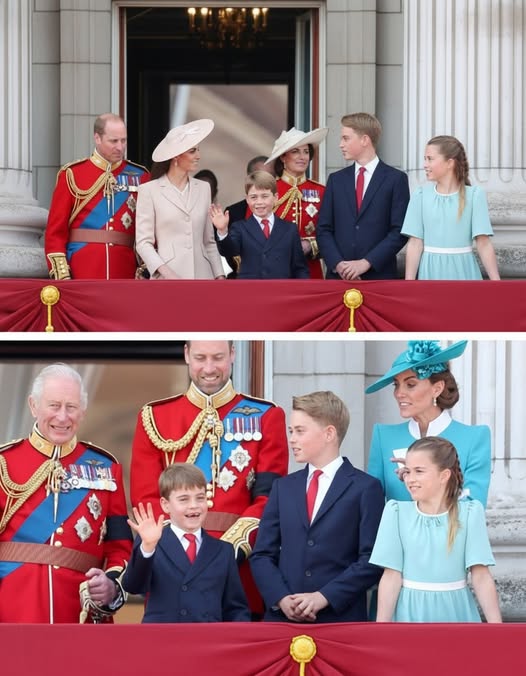

On a serene afternoon within the grounds of Kensington Palace, a subtle yet profoundly significant moment is reportedly approaching for Prince William and Princess Catherine. Insiders reveal that the Duke and Duchess of Cambridge are preparing for what they describe as the inevitable “day will come” moment with their youngest son, Prince Louis. While the palace gardens exude tranquility and the public sees a picture-perfect royal family, behind the scenes, careful planning, reflection, and anticipation are underway for a pivotal stage in the young prince’s life—one that could mark a turning point for both him and the monarchy.
Prince Louis, the youngest of the Cambridge children, has grown in the public eye but maintains a rare sense of privacy and innocence due to his parents’ meticulous guidance. Unlike his older siblings, Prince George and Princess Charlotte, Louis has experienced fewer public engagements, though his appearances are always met with delight from royal watchers and the general public alike. It is within this context of balance—between normal childhood experiences and the expectations of royal heritage—that William and Catherine are preparing for a moment that has been long acknowledged by insiders: the first major public responsibility or ceremonial engagement for Prince Louis that will signal his gradual integration into royal duties.
The phrase “day will come,” as used by palace insiders, encapsulates a blend of inevitability and anticipation. It is not a sudden or hasty decision but a carefully considered step in the young prince’s development. Both William and Catherine are acutely aware of the weight of tradition, the scrutiny of the media, and the public’s fascination with every aspect of royal life. At the same time, they are deeply committed to raising their children with a sense of groundedness, empathy, and confidence, ensuring that each milestone is approached with intention and care.
Observers note that William, as the future king, and Catherine, as a modernizing influence within the monarchy, have always prioritized thoughtful parenting within a public framework. They have balanced formal duties, charitable engagements, and family life in a manner that has redefined contemporary royal expectations. The upcoming turning point for Prince Louis represents the next chapter in this approach: a carefully curated step that will allow him to engage with his royal responsibilities while retaining the essence of childhood and individuality.
According to palace insiders, the preparation for this moment has involved discreet consultations with royal advisors, education experts, and family members. Discussions reportedly center on ensuring that the engagement is age-appropriate, meaningful, and reflective of the values William and Catherine hope to instill in Louis. The monarchy, they note, has historically navigated such transitions with varying degrees of public exposure, but the Cambridges are said to be particularly meticulous, emphasizing gradual introduction over spectacle.
The implications of this forthcoming turning point are significant. While Prince Louis is third in line to the throne after his father and elder siblings, his actions and public appearances are already carefully observed. A formal engagement or ceremonial responsibility will mark the beginning of a more visible role, highlighting both his personal development and the family’s broader commitment to continuity and service. Royal commentators have pointed out that such moments serve not only to introduce young royals to public life but also to reinforce the monarchy’s connection with its audience, demonstrating how tradition evolves with each generation.
This anticipated moment is also deeply personal. William and Catherine have reportedly emphasized the importance of preparing Louis emotionally and psychologically, ensuring that he understands the significance of his role without feeling overwhelmed. The balance between expectation and autonomy is central to their approach, reflecting a modern understanding of child development within the unique context of royal life. Insights from child psychologists suggest that this thoughtful preparation may foster resilience, confidence, and empathy—qualities essential for future royal responsibilities.
Social dynamics within the royal family are also expected to play a role. Prince George and Princess Charlotte, having already experienced early public engagements and ceremonial duties, may serve as examples and sources of encouragement for Louis. Observers suggest that the Cambridges aim to cultivate a supportive environment where each child can develop at their own pace while learning the values of service, responsibility, and grace under public scrutiny.
The timing of this turning point is carefully considered. While no official announcement has been made, insiders indicate that it will coincide with a significant public or charitable event, allowing Louis to step into a meaningful role that aligns with his age and personality. Such strategic planning ensures that the moment is both memorable and constructive, offering a platform for growth and public engagement that resonates with the monarchy’s long-term vision.
King Charles’s reign is also influencing the context in which this moment unfolds. As the monarchy adapts to a new era, the roles of younger family members, including Prince Louis, are being framed with foresight and deliberation. Observers note that the Cambridges’ approach reflects a desire to harmonize tradition with modernity, emphasizing education, empathy, and public service while respecting the individuality of each child. The “day will come” moment is thus both a family milestone and a reflection of the monarchy’s evolving strategy for continuity and relevance.
The public’s fascination with Prince Louis underscores the importance of this turning point. From his earliest appearances, he has captured hearts with a blend of charm, energy, and curiosity. Royal photographers and media outlets have chronicled his milestones, from his christening to family outings, yet William and Catherine have consistently protected his private moments. This careful stewardship suggests that the upcoming event will be handled with similar precision, highlighting Louis’s capabilities while preserving his well-being.
Cultural and historical context also adds weight to this development. Throughout British history, the introduction of young royals to public responsibilities has been symbolic of continuity, duty, and the monarchy’s commitment to national life. Each generation navigates this transition differently, influenced by societal expectations, personal values, and the prevailing media landscape. For Prince Louis, this turning point represents not only personal growth but also the perpetuation of a centuries-old tradition, thoughtfully adapted for contemporary times.
Royal experts emphasize that the Cambridges’ approach to this milestone may set a precedent for future generations. By emphasizing preparation, support, and age-appropriate responsibility, William and Catherine are crafting a model that balances visibility with privacy, duty with personal development, and tradition with modern parenting philosophy. This methodical approach may influence how future heirs and younger royals are introduced to public life, ensuring a sustainable and compassionate framework for engagement.
The emotional dimension of this turning point cannot be overstated. For William and Catherine, the moment represents both pride and anticipation, a recognition of Louis’s growth and readiness to embrace aspects of royal life. Observers note that such transitions often evoke reflection, nostalgia, and heightened awareness of family legacy. The Cambridges are reported to approach the occasion with quiet dignity, ensuring that it is experienced as a milestone of personal significance rather than a mere public spectacle.
The ripple effects extend to the broader royal narrative. As Prince Louis gradually assumes responsibilities appropriate to his age and station, the monarchy reinforces its relevance in contemporary society, demonstrating how the royal family can honor its heritage while adapting to modern expectations. The careful orchestration of this moment also reflects a deep understanding of public perception, media dynamics, and the enduring symbolic power of the monarchy in national and international consciousness.
In conclusion, the anticipated “day will come” moment for Prince Louis represents a quiet yet profound turning point for the Cambridge family and the monarchy at large. It exemplifies the careful balance between tradition and modernity, the nurturing of young royals’ potential, and the preservation of public trust through thoughtful, deliberate engagement. Prince William and Princess Catherine’s meticulous preparation ensures that the moment will be meaningful, dignified, and emblematic of the values they wish to instill: empathy, responsibility, and grace.
As Buckingham Palace prepares for this pivotal stage, the public and royal watchers alike await what promises to be a defining moment in the young prince’s life—a moment that will be remembered not only for its ceremonial significance but also for its reflection of a family committed to continuity, service, and the enduring legacy of the British monarchy. The quiet afternoon may soon give way to a historic turning point, one that marks the evolution of Prince Louis from a cherished child into a young royal poised to embrace his future with dignity, warmth, and purpose.